
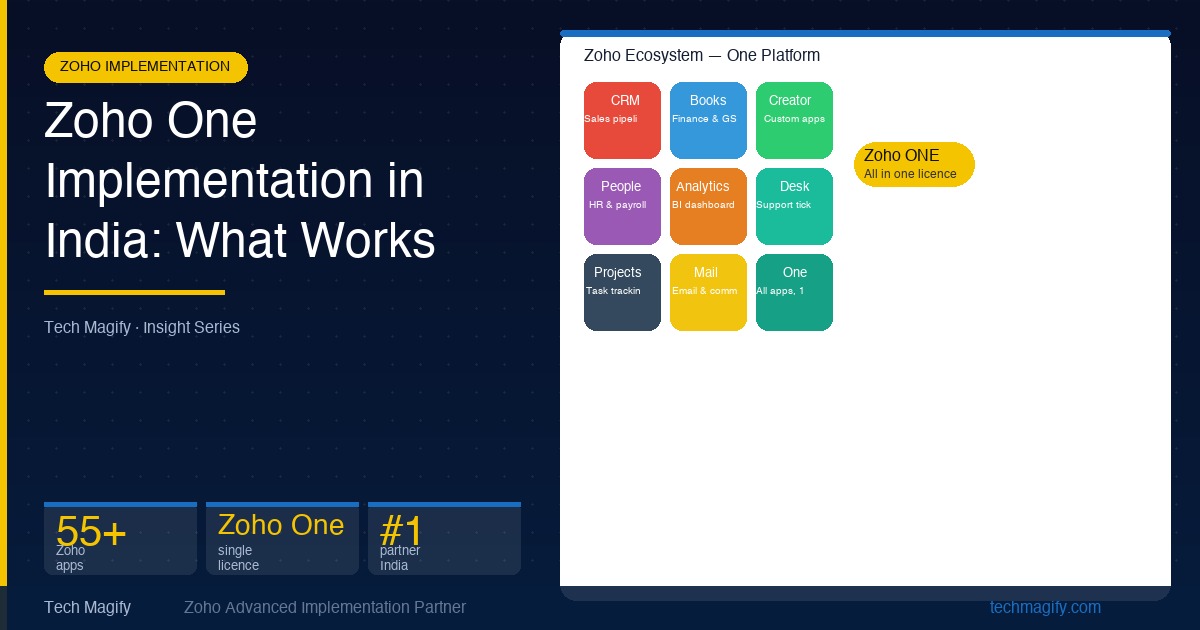
Zoho One Implementation in India: What Works and What to Watch Out For
Zoho One has become the go-to business operating system for thousands of Indian companies looking to consolidate their tech stack without burning through their budgets. With over 45 integrated applications covering everything from CRM and finance to HR and project management, the promise is compelling. But here’s the thing — buying a Zoho One license is the easy part. The real challenge lies in implementing it correctly. And in India, where business processes, compliance requirements, and organizational cultures carry their own unique flavor, the implementation journey can be either a smooth ride or a frustrating mess. Let’s break down what actually works and what you need to watch out for.
Why Zoho One Has Gained Serious Traction in India
India’s mid-market and growing enterprise segment has embraced Zoho One for several good reasons. The pricing is hard to beat — especially when compared to stitching together multiple SaaS tools from different vendors. The fact that Zoho is an Indian company with strong local support infrastructure adds a layer of trust that imported alternatives sometimes struggle to match. Companies in cities like Bangalore, Mumbai, Hyderabad, and Chennai have been particularly aggressive adopters, driven by thriving startup ecosystems and a culture that values operational efficiency.
But adoption without proper implementation is like buying a high-performance car and never learning to drive it properly. That’s where working with the right zoho implementation partners becomes critical. The difference between a successful deployment and a half-baked one almost always comes down to who’s guiding the process.
What Actually Works in Zoho One Implementation
Starting with Clear Business Process Mapping
The implementations that succeed in India share a common thread — they start with ruthless clarity about existing business processes. Before touching any Zoho application, successful teams map out their workflows, identify bottlenecks, and define what success looks like. A seasoned zoho certified consultant will always insist on this discovery phase, even if the client wants to skip it and jump straight into configuration. Resist the temptation to skip this step. It saves weeks of rework later.
Phased Rollouts Over Big Bang Launches
Indian organizations, especially those with distributed teams across multiple states and time zones, tend to fare much better with phased rollouts. Start with CRM and Books, get those stable, train your teams, and then layer on Projects, Desk, or People. Companies that try to activate all 45+ apps simultaneously almost always end up with confused employees and underutilized tools. A good zoho partner bangalore or zoho partner mumbai team will tell you the same thing — patience in implementation pays off exponentially.
Customization That Respects Indian Compliance Needs
GST invoicing, TDS calculations, state-specific tax rules, and SEBI compliance for financial services — India’s regulatory landscape adds layers of complexity that out-of-the-box configurations rarely handle perfectly. The implementations that work well are those where customization is done thoughtfully. For instance, companies in the financial services space, including wealth management software providers and wealth management platform providers, have found that Zoho’s flexibility allows them to build compliance-ready workflows, but only when the configuration is handled by someone who understands both the platform and the regulatory environment.
Integration with Existing Tools and Data Migration Done Right
Most Indian businesses aren’t starting from scratch. They have data in Tally, legacy CRMs, Excel sheets that have been passed down like family heirlooms, and various third-party tools. Successful implementations prioritize clean data migration and thoughtful integration. Working with zoho authorized partners who have experience handling messy data transitions can mean the difference between a smooth go-live and months of data cleanup afterward.
What to Watch Out For
Choosing the Wrong Implementation Partner
This is probably the single biggest risk. India has no shortage of consultants claiming Zoho expertise, but the quality varies wildly. Some partners focus purely on configuration without understanding your business context. Others overpromise customization capabilities and underdeliver. Always look for an authorized zoho partner or a zoho premium partner with verifiable case studies and client references. Ask for specifics — how many Zoho One implementations have they completed? In which industries? What was the average timeline? These questions filter out the pretenders quickly.
Underestimating Change Management
Technology adoption in Indian workplaces is deeply cultural. Teams accustomed to doing things a certain way will resist change, sometimes passively and sometimes actively. The implementations that stumble often do so not because the technology fails, but because the people side of the equation was ignored. Invest in training sessions, create internal champions, and make the transition feel like an upgrade rather than an imposition. A zoho authorised partner worth their salt will build change management into the project plan, not treat it as an afterthought.
Over-Customizing Too Early
There’s a fine line between useful customization and over-engineering. Some companies get so excited about Zoho Creator, Deluge scripting, and custom modules that they build a Frankenstein system that becomes impossible to maintain. Start with the standard features, use them for a few months, understand the gaps from real usage, and then customize. This is especially relevant for niche use cases like wealth management software development or portfolio management software development, where the temptation to build everything custom from day one can lead to brittle solutions that break with every Zoho update.
Ignoring Ongoing Optimization
Implementation isn’t a one-time event — it’s an ongoing process. Zoho releases updates and new features regularly, and your business processes will evolve too. Companies that treat go-live as the finish line often find themselves stuck with outdated configurations within a year. Budget for post-implementation support and periodic reviews. The best outcomes happen when companies maintain an ongoing relationship with their implementation partner for continuous optimization.
The India-Specific Considerations That Matter
Beyond the technical aspects, there are practical realities that shape Zoho One implementation success in India. Internet connectivity in smaller cities and towns can be inconsistent, which affects cloud-based workflows. Multi-language support becomes important when your team spans multiple states. And the sheer diversity of business practices — from highly formal enterprise processes in Mumbai’s financial district to the agile, move-fast culture of Bangalore’s tech corridors — means that no two implementations should look the same.
Regional tax structures, banking integrations with Indian payment gateways, and UPI-based transaction tracking are all India-specific requirements that need careful attention during setup. The companies that acknowledge these nuances upfront and plan for them tend to have smoother experiences.
Final Thoughts
Zoho One is a genuinely powerful platform, and its value proposition for Indian businesses is hard to argue with. But the platform is only as good as its implementation. Take the time to choose the right partner, invest in proper discovery and planning, roll out in phases, and don’t neglect the human side of the transition. The companies that get this right don’t just implement software — they transform how they operate. And in a market as competitive as India’s, that kind of operational edge matters more than ever.
Get Your Zoho One Implementation Right the First Time
Tech Magify has guided firms like Abakkus, Emkay Global, and ValueQuest through complex Zoho rollouts across CRM, Finance, and Operations. Book a scoping call and walk away with a clear implementation roadmap — no obligations, no fluff.