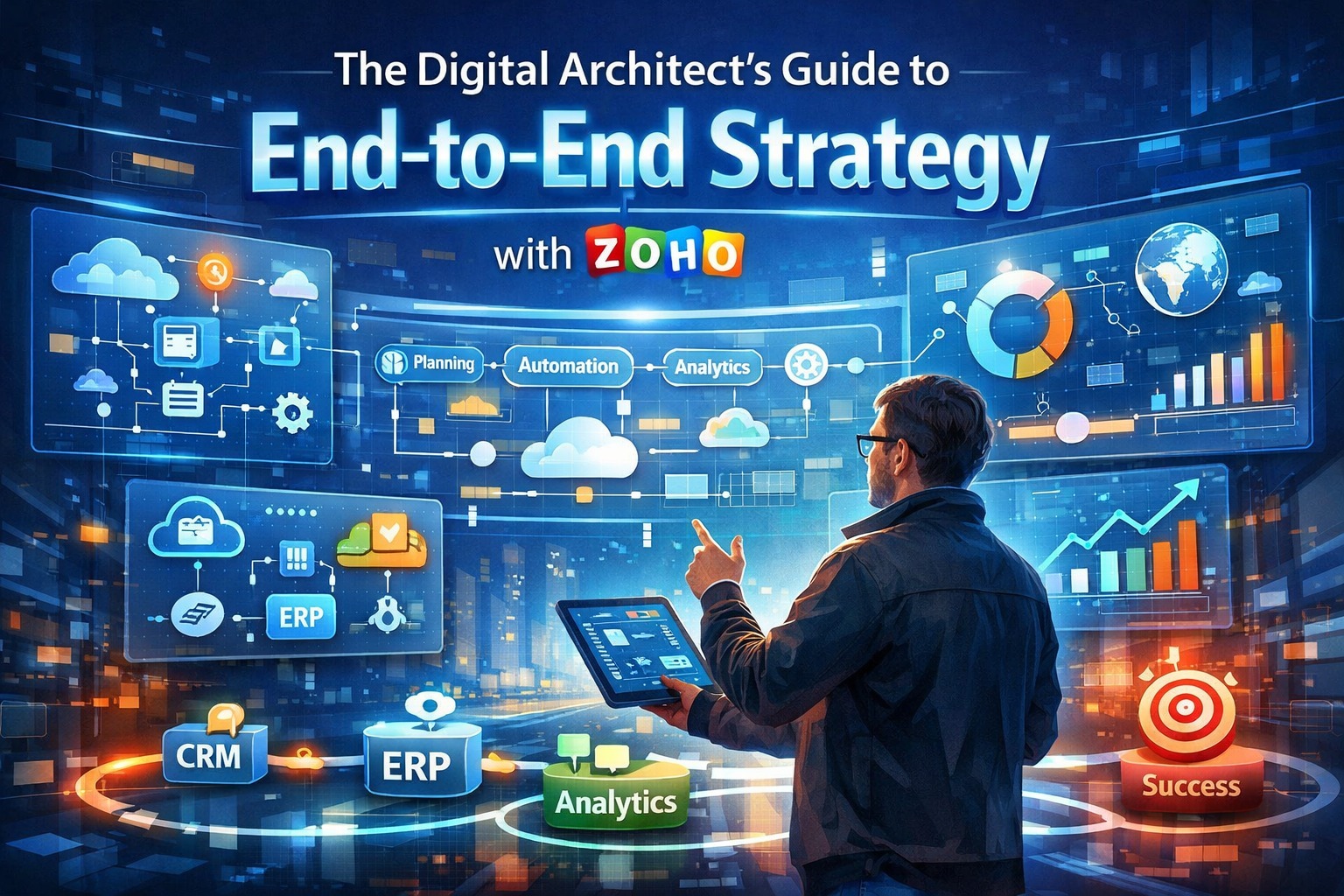
Today’s companies don’t just use tech—they grow around it. When old software pieces stop working together, better connections matter most. One clear plan for using Zoho fully can change how teams do their work. Marketing, sales, money handling, and people management - all fit into one system when done right. This way of linking tools isn’t optional anymore. It shapes results. Building everything on Zoho makes actions smoother across different parts of a company. The strongest setups think ahead, not piece by piece. A full approach pulls each team forward without extra steps. Working inside one platform removes delays others accept. Stronger flow comes from design, not luck.
Developing a comprehensive Zoho digital transformation strategy ensures that these connections are not just functional but optimized for long-term growth.
1. What a Digital Architect Does
Not only does a Digital Architect consider software functions, but also how information moves and how customers evolve over time. When working with Zoho, it involves more than setting up apps - instead, shaping a full journey where connections between systems grow naturally and adapt as needs change. This is the core of an end-to-end Zoho strategy.
The Vision of Connectivity Imagine trying to build a house where each room locks its tools away. That is what happens when data stays stuck inside single teams. A digital architect steps in to unlock those doors. Using a full Zoho setup changes how pieces connect across departments. Marketing grabs a lead? Sales sees it right away. Legal gets alerted without asking. Finance finds billing starting on its own. One flow moves through every stage. Nothing waits. Nobody repeats work.
2. Building Blocks for Changing Business with Zoho
A fresh start begins when companies rethink their daily actions. Not by switching systems, but through new ways of solving tasks. True change shows up in habits, not headlines. Progress hides in routine shifts, far from flashy updates. This zoho digital transformation guide focuses on these foundational shifts.
Phase One: Evaluating Present Conditions. Finding gaps in how things run now comes first, before bringing in anything new.
Identify Friction Points: Where do employees manually enter data twice?
Map Data Lineage: How does a customer record move through your company?
Missing pieces in today’s reports: what aren’t you seeing? How do gaps hide patterns right now?
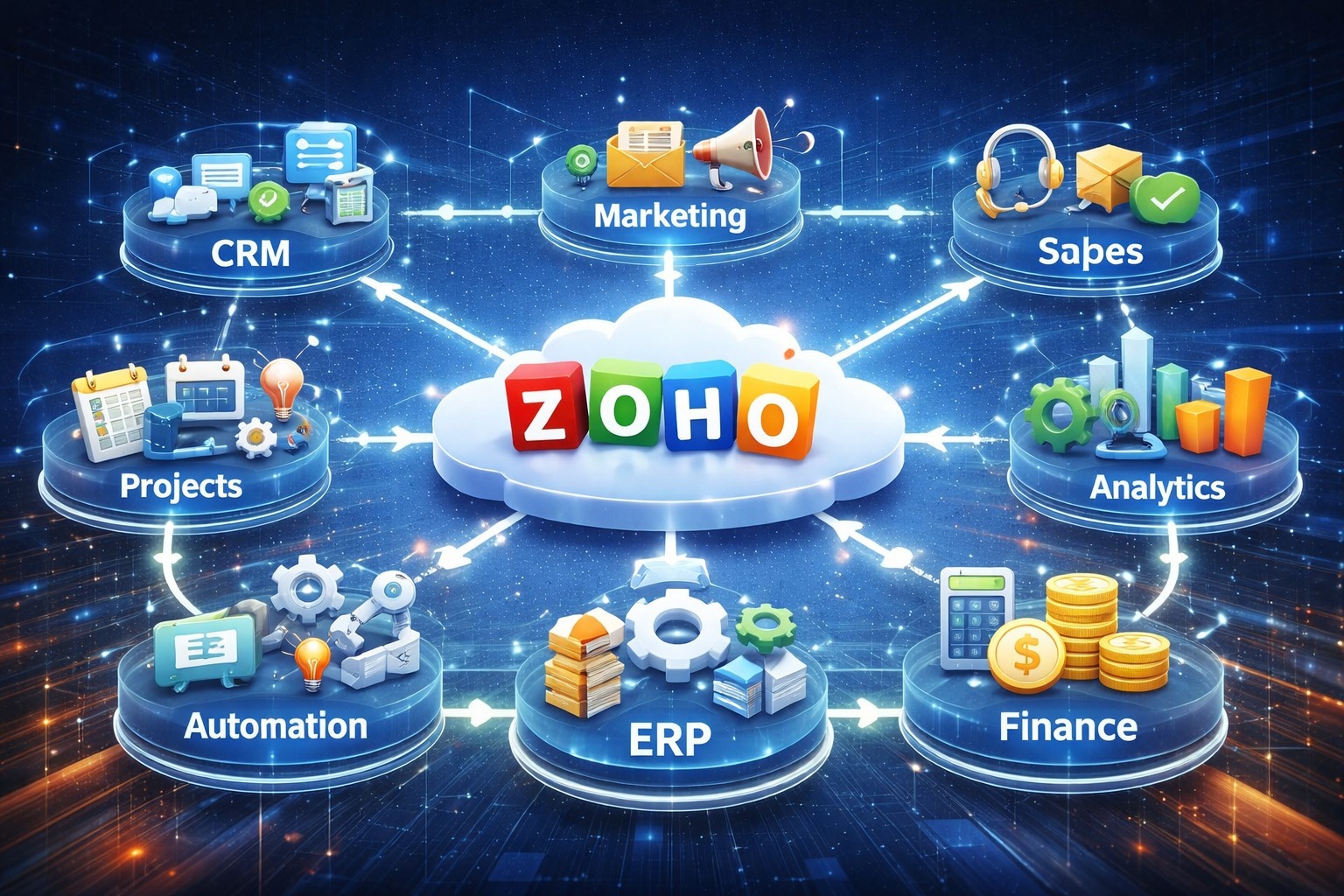
Phase Two: Building With Nature. One strong way to build your Zoho setup? Stick to the Power of One. When everything runs on one platform, costs drop because there’s less need to connect separate systems. Jumping from tool to tool brings danger - fewer vendors means tighter security. Think of it like this: unity powers progress in today’s tech-heavy world. A cohesive Zoho ecosystem strategy relies on this central hub.
3. The Pillars of an End-to-End Zoho Strategy
A. Customer Experience (CX) Mastery Walking beside the buyer matters more than any step in a Zoho tech shift plan.
Notice how visitors act: by setting up automatic tools that follow their moves.
Start by turning attention into action: through a dependable customer system. What matters most shows up when follow ups stay on track. Deals grow where details are tracked well. A solid platform keeps conversations moving forward naturally.
Got a problem? Fix it fast: with built-in support right where you work. Help arrives quick when messages pop up in real time. Talking live means answers show faster than email ever could.
Start by checking customer feedback through quick surveys to track satisfaction levels. Instead of guessing, rely on actual responses showing how likely people are to recommend you. When numbers shift, respond fast - tweak your approach while things unfold. Real results shape smarter moves without waiting. Adjustments happen naturally when data leads the way.
B. Operational Excellence and Automation Smart automation naturally brings efficiency. In a zoho digital transformation strategy, "Workflows" along with "Blueprints" guide how your business runs.
Each salesperson sticks to identical procedures: Step by step stays unchanged across the team. Following one path keeps things steady. Nobody drifts off course. Uniform actions become routine. The method remains fixed for all. Consistency shapes daily tasks. Repetition builds clear patterns. Everyone moves in lockstep. Exact sequences matter most.
Mistakes fade when machines take over typing tasks: One by one, slips vanish as software checks each detail. Not because it tries harder, but because it repeats without drift. Accuracy climbs not from effort but from consistency. Errors shrink simply by swapping hands for code.
Team tasks get split using software: that shows who’s busy right now. What matters is matching jobs to available time each day. Tools help shift work around when someone gets overloaded. Seeing current load keeps things moving without slowdowns. Balance comes from adjusting daily, not guessing ahead.
4. From Numbers to Insights
Money moves live when a company runs fully digital. Plugging your finance tools into Zoho's wider network opens clear views like never before. This is the practical application of an end to end Zoho strategy.
Real-Time Revenue Tracking Right after a sale gets tagged complete, the system fires off a bill automatically. Once that happens, stock levels shift without anyone typing it in. Linking customer records to money tracking trims down the quote to the payment path. Smooth handoffs like this often show up in well-built Zoho setups.
Advanced Analytics: Hidden patterns start to show when numbers from separate teams come together. Refining raw information turns it into something useful, much like crude becomes fuel. Leaders who dig deep might notice that spending on ads in one area links to higher service demands later. Connections like these stay invisible without careful analysis.
5. Security and Governance in Digital Times
When operations shift toward one hub, staying secure matters more than ever. Governance can’t be an afterthought in any Zoho-led changeover - it needs sharp attention early on. What happens behind the scenes shapes how well things hold up later.
Role-Based Access: Only give staff access to information tied directly to their job. What someone sees depends on their role in the company.
Audit Trails: Every edit to critical files gets recorded automatically. Changes show up in a timestamped history, visible to admins only. A running list tracks who did what and when. Each update locks into place right after it happens. Nothing slips through without leaving a mark behind.
Compliance: Staying on top of worldwide rules means handling personal information correctly. One way forward? Letting systems manage those details automatically. Rules shift constantly - machines help keep pace without falling behind.
6. Overcoming Transformation Hurdles
Hard things stay hard, no matter the gadget. Skip talking about people, and any Zoho digital transformation strategy misses the point.
Culture and Change Management Folks ignore tools they don’t trust. For your full Zoho plan to last:
Executive Buy-In: When leaders actually use the tools, others follow without needing a push.
Continuous Education: Skills need updates when digital spaces shift. Staff adapt as tools change around them. Growth happens step by step, not all at once. Learning keeps pace with new tech demands. Progress shows up quietly over time.
Feedback Loops: Start by hearing what frontline users say. When they speak up about problems, change the program so it works better for them each day. Their real experiences guide small fixes that add up. Watch how they struggle, then shape updates around those moments. Each tweak answers a specific complaint. Let their words pull the design in new directions. Notice patterns in gripes to find where shifts matter most.
Avoiding "Feature Fatigue" Jumping straight into all features feels right. Still, smart Zoho setups move step by step. Begin with CRM and Finance - call it the base. Only after that explore HR, Creator, or Analytics. Steps matter more than speed.
7. The Role of Expertise When Working With Techmagify
Not every team handles digital design smoothly. Some spot right away the tools feel straightforward, yet planning how they fit together takes experience. That gap? Techmagify steps into that space naturally.
By working with experts like TechMagify, businesses can:
Customization: Tweak how things flow when basic options fall short. Shape steps your way once presets stop working.
Data Migration: Old files need shifting - carefully - to new systems. Years pass. Information moves across platforms, piece by piece. Nothing gets left behind. Each entry stays intact. Mistakes are avoided. Systems change but data does not break. The past remains readable. Transfer happens slowly. Accuracy matters most. Old formats turn into new ones. Details survive the jump.
System Optimization: When more people start using the system, it needs to stay fast. Smooth operation depends on constant fine-tuning behind the scenes. Growth puts pressure on resources, so adjustments happen regularly. Performance stays high only when updates are timely. A steady pace of improvements keeps everything running without delays.
8. How Well Your Plan Is Working
Start by checking whether your Zoho digital shift shows progress. Notice changes in daily operations that reflect smoother workflows. One sign pops up when team tasks take less time than before. Another clue hides in how often people actually use the new tools. Watch customer response times shrink over weeks. See errors drop after switching systems. Satisfaction scores might climb without warning. Reports generate faster now, almost on their own. Team feedback could surprise you with clear patterns. Unexpected wins appear where least expected. Use this zoho digital transformation guide to track the following:
Cost Efficiency: A drop in Customer Acquisition Cost feels likely once marketing tools run smoother. Efficiency gains tend to trim expenses over time, especially when systems handle tasks without extra help. Savings appear as campaigns learn what works. Less waste means lower costs per new buyer. Numbers usually shift downward when automation takes hold.
Employee Productivity: What workers get done matters most when teams stay the same size. Output climbs even if no new hires join. Performance shows in how much moves forward daily. Tasks completed tell the real story over time. Work piles up less when pace stays steady. Results grow without adding roles. Efficiency hides in routine actions repeated well.
Data Accuracy: Fewer hands-on fixes needed when numbers behave themselves. Mistakes fade where care shapes every entry. Precision grows quietly behind consistent checks. Details align without constant review. Trust builds slowly through steady results.
Sales Cycle Time: From first contact to cash in hand - that’s how long it takes to turn interest into income. A prospect shows up, then later pays; the clock tracks every step between. Timing shifts based on follow-up speed, decision pace, and response gaps. Some move fast, others linger weeks before committing. Each phase adds minutes, hours, days - all counted till sale closes.
9. Using AI and Machine Learning to Prepare for What Comes Next
One last move in a full end to end Zoho strategy? Bringing in artificial intelligence. Inside that system, it spots sales patterns before they fully form. Think of it like this - timing matters, so the software hints when to reach out to someone new. Customers who might leave? It flags those ones too. Run things this way long enough, decisions start happening just ahead of problems. What used to be guesswork becomes something closer to foresight. Day after day, the workflow learns, adjusts, stays one step ahead. This is the pinnacle of a Zoho ecosystem strategy.
10. The Way Ahead
Starting fresh every day keeps zoho digital transformation strategy alive; progress never finishes. When software breathes like a changing forest instead of sitting still, the company moves quicker, thinks clearer, stays steady through storms.
Success lives in small things, really. How data moves between apps matters - so does an alert warning a manager about delays. A good report can shape big choices, even ones worth millions. Think full picture: Zoho set up right, help coming from teams such as techmagify. That future? Not waiting around for it. Already moving ahead.
FAQS
Q1. What is an end-to-end digital transformation strategy with Zoho?
Ans. It is a holistic approach to shifting all business operations into a unified, cloud-based ecosystem. By connecting every department—from sales to finance—through a single source of truth, companies eliminate data silos and automate entire value chains for maximum agility.
Q2. Which Zoho applications are essential for complete business digitalization?
Ans. The core pillars include Zoho CRM for sales, Zoho Books for finance, and Zoho Desk for support. Integrating these with Zoho Analytics for intelligence and Zoho One for suite-wide access creates a fully digitalized infrastructure.
Q3. How does Zoho integration improve operational efficiency across departments?
Ans. Integration allows data to flow seamlessly between apps, such as automatically generating a Zoho Books invoice when a deal closes in Zoho CRM. This removes manual data entry, reduces errors, and speeds up the "lead-to-cash" cycle across the entire organization.
Q4. What are the key steps to implement Zoho for digital transformation?
Ans. The process starts with a thorough workflow audit and objective setting, followed by data cleansing and migration. From there, teams focus on custom configuration, employee training, and iterative optimization with experts like TechMagify to ensure long-term adoption.