
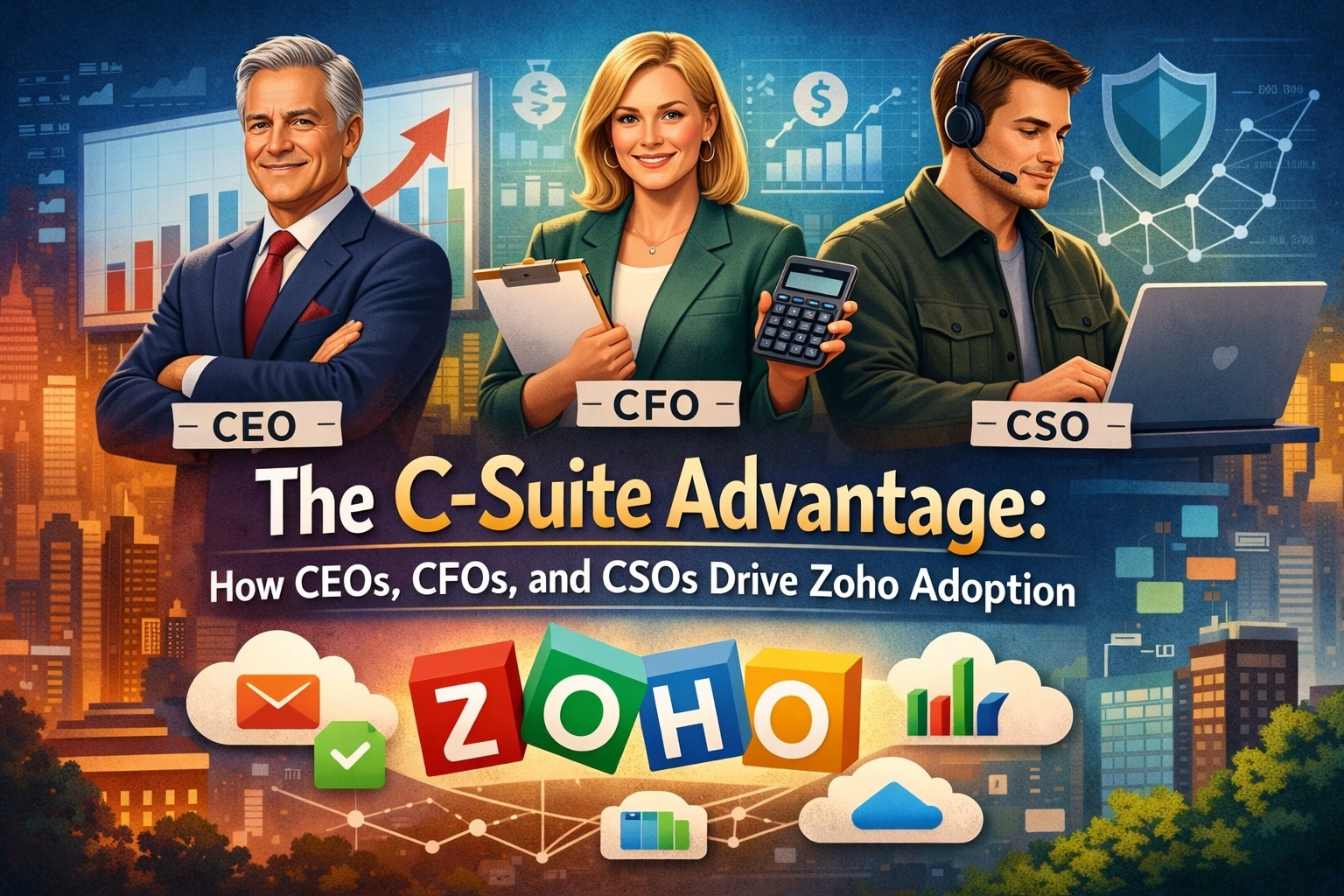
In the current era of rapid digital transformation, the success of a technology rollout is rarely determined by the software alone. Instead, it is dictated by the vision and commitment of an organization’s highest-ranking leaders. When it comes to implementing the Zoho ecosystem, the "C-suite advantage" is the secret weapon that separates companies that merely survive from those that thrive and scale.
By leveraging professional C-suite development services, executive leaders can move beyond surface-level tool usage to build a high-performance infrastructure. This guide explores the pivotal roles of the CEO, CFO, and CSO in driving Zoho adoption and ensuring a successful C-suite Zoho implementation.
What is C-Suite Management?
To understand the impact of executive leadership on technology, we must first define what C-suite management is. The "C-suite" refers to the top-ranking senior executives in an organization, named for their titles, which typically start with "Chief" (e.g., Chief Executive Officer, Chief Financial Officer, Chief Strategy Officer).
C-suite management is the practice of providing high-level strategic direction, setting organizational goals, and ensuring that every department operates in harmony toward a shared vision. In the context of digital transformation, what is c suite management boils down to is the ability to align technical tools with business outcomes. Effective C-suite management involves:
Strategic Alignment: Ensuring that technology investments, particularly in the Zoho ecosystem, directly support long-term business objectives and market positioning.
Cultural Leadership: Promoting a data-driven culture and managing the "people side" of technical change, which is often the most significant hurdle in any C-suite Zoho implementation.
Resource Allocation: Securing the budget and talent—such as expert C-suite development services—needed to execute a digital roadmap effectively.
Risk Oversight: Managing the security, compliance, and financial risks associated with moving entire operations to a unified cloud environment.
The CEO’s Vision: Setting the Digital North Star
The Chief Executive Officer is the primary architect of a company’s future. For a CEO, Zoho is not just a collection of apps; it is the "Central Nervous System" of the business. The CEO’s primary responsibility in driving adoption is to articulate a clear "Digital North Star" that justifies the shift to a unified platform.
Driving the Data-Driven Culture
A CEO drives Zoho adoption by making data the universal language of the company. When a CEO insists on reviewing performance through real-time Zoho Analytics dashboards rather than manual spreadsheets, the rest of the organization follows suit. This top-down pressure ensures that data hygiene remains a priority at every level. The C-suite advantages become clear when the CEO can spot a market trend or a regional dip in sales instantly, without waiting for a monthly report.
Scaling with Agility
The CEO’s focus is on scalability. By implementing Zoho One, a CEO ensures the company has a "future-proof" foundation. Whether the company is expanding into new markets or launching new product lines, the CEO relies on the flexibility of the Zoho ecosystem to adapt without the friction of switching platforms. A CEO understands that C-suite Zoho implementation is about long-term agility, allowing the company to pivot as fast as the market demands.
The CFO’s Precision: Turning Tech into ROI
The Chief Financial Officer (CFO) has a unique role in a successful C-suite Zoho implementation. While the CEO focuses on the "where," the CFO focuses on the "how much" and the "how efficiently."
Financial Transformation and Automation
A CFO drives adoption by integrating Zoho Books, Inventory, and Expense into a unified financial hub. By automating the "Lead-to-Cash" cycle, the CFO reduces manual errors and shortens the billing cycle. Professional Zoho development services allow the CFO to create custom scripts that handle complex revenue recognition and multi-currency consolidations automatically. This level of precision is one of the primary C-suite advantages, as it provides the CFO with a crystal-clear view of the company’s cash flow at any given second.
Cost-Efficiency and Value Management
The financial C-suite advantages of Zoho are perhaps most visible to the CFO. Compared to legacy enterprise systems that require massive upfront capital and expensive maintenance, Zoho offers a predictable, subscription-based model. The CFO ensures adoption by demonstrating how the platform lowers the Total Cost of Ownership (TCO) while increasing operational efficiency. In a C-suite Zoho implementation, the CFO acts as the guardian of ROI, ensuring every feature used contributes to the bottom line.
The CSO’s Strategy: Maximizing the Revenue Engine
The Chief Strategy Officer (CSO) or Chief Sales Officer is responsible for the company’s growth trajectory. For the CSO, the Zoho ecosystem is the primary tool for driving revenue and improving customer retention.
Pipeline Visibility and AI Insights
The CSO drives adoption by using Zoho’s AI assistant, Zia, to predict deal closures and identify high-potential leads. When the CSO uses these insights to coach managers, the value of the system becomes undeniable. Implementation success for a CSO means moving from "guessing" to "knowing" exactly where every dollar in the pipeline stands. This predictive power is a core component of c suite advantages in modern sales environments.
Unified Customer Experience
A CSO ensures that sales, marketing, and support are no longer in silos. By integrating Zoho CRM with Zoho Desk and Zoho Campaigns, the CSO provides the team with a 360-degree view of the customer. This alignment ensures that every interaction is personalized and that no lead is ever lost in transition. In the context of C-suite Zoho implementation, the CSO’s role is to ensure that the technology removes friction from the customer journey.
Overcoming Challenges in C-Suite Zoho Implementation
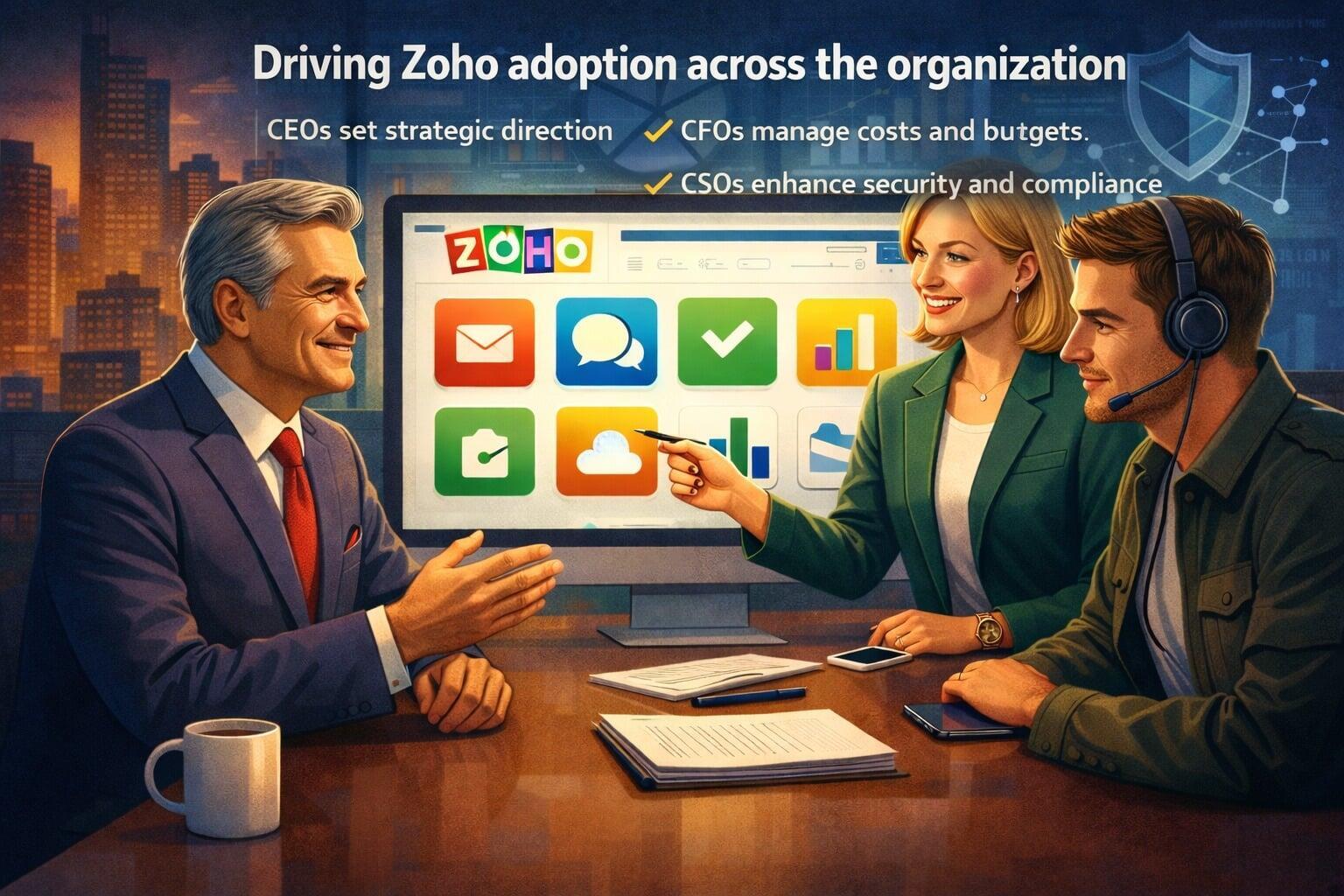
Even with executive backing, implementation can face hurdles such as employee resistance or data migration complexities. Successful C-suite management addresses these through specific strategic pillars:
Executive Sponsorship: Having a "Project Champion" in the C-suite who communicates the "why" behind the change. This leader bridges the gap between the technical team and the end-users.
Phased Rollouts: Starting with high-impact modules like CRM before expanding to the full suite to demonstrate quick wins. This builds momentum and reduces the "change fatigue" that can derail massive rollouts.
Specialized Expertise: Recognizing that out-of-the-box settings are rarely enough for complex enterprises. Engaging with Zoho development services ensures the platform is tailored to specific executive reporting needs and complex enterprise workflows.
Data Migration Planning: The C-suite must prioritize data integrity. A failed migration of old, messy data into a new system is one of the quickest ways to lose employee trust.
The Long-Term C-Suite Advantages of Zoho
When the C-suite leads the charge, the benefits of Zoho are magnified across the entire organization:
Faster ROI: Strategic oversight ensures the system is used for its highest-value functions from day one, rather than languishing as an expensive digital filing cabinet.
Higher User Adoption: Employees are more likely to embrace a new system when they see their leaders using it to make decisions and provide feedback.
Data Integrity: A top-down mandate for accuracy leads to cleaner data, more reliable forecasting, and a more honest assessment of business health.
Operational Harmony: The entire organization moves in sync, guided by the same real-time metrics and automated workflows, reducing internal politics and friction.
Strategic Decision-Making with Zoho Analytics
One of the most profound c suite advantages is the ability to perform cross-functional analysis. In a traditional setup, the CEO might see sales numbers but not the customer support costs associated with those sales. In a C-suite Zoho implementation, integrated analytics allow leaders to see the true cost of acquisition vs. the lifetime value of a customer across all departments. This "macro view" enables the C-suite to make aggressive strategic moves with confidence, knowing the data supports their direction.
Conclusion
The journey to digital excellence is not a solo mission for the IT department. It requires the collective power of the CEO’s vision, the CFO’s financial precision, and the CSO’s growth strategy. By understanding the C-suite advantages and focusing on a strategic C-suite Zoho implementation, organizations can turn software into a competitive moat that rivals any in their industry.
To achieve this level of sophistication, most successful enterprises look for a partner that bridges the gap between high-level strategy and technical execution. This is where Techmagify excels. As a specialist in Zoho development services, Techmagify works alongside your leadership team to mold the Zoho ecosystem into a custom-built engine for sustainable success. Whether you are defining what C-suite management is for a new startup or optimizing a global enterprise, Techmagify provides the technical backbone to support your executive vision.
FAQs
Q1. What is the role of CEOs in driving Zoho adoption within an organization?