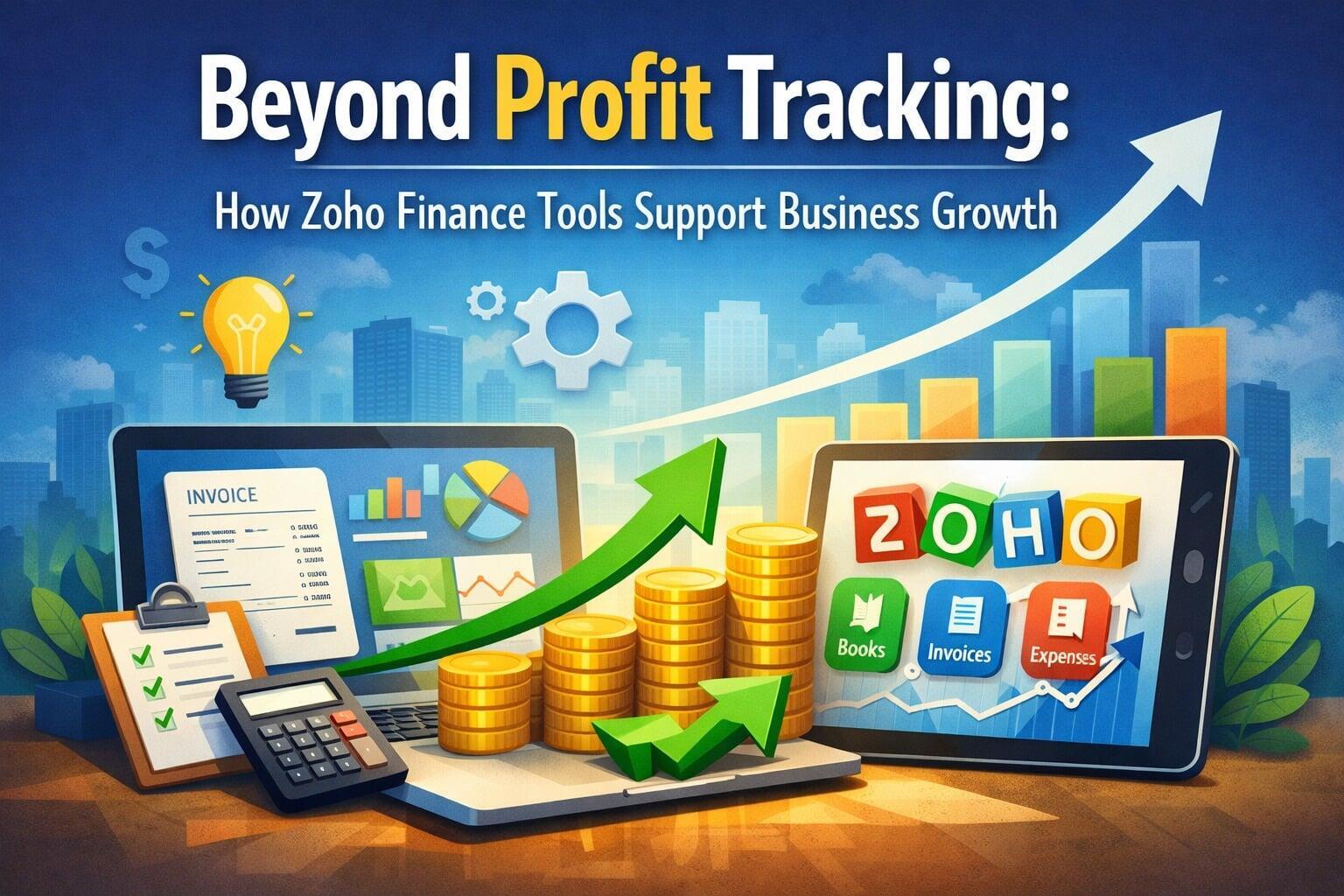
These days, a company’s top money person does way more than count pennies - they shape the future. Instead of just tracking numbers, success now means building systems where each sale, bill, or payment feeds smarter decisions. Using tools like Zoho Finance Suite helps firms stop treating finances as paperwork and start seeing them as fuel. With this shift, businesses grow not by chance but through clear insight pulled straight from daily operations.
Money moves differently when companies use one system for all financial tasks. Instead of just watching numbers, work flows smoother from first contact to final payment. Steps that once dragged now connect cleanly. Growth becomes easier because gaps shrink. What feels like simple tracking turns into smarter operations over time.
1. Zoho Moves Shape Finance Leadership
What matters most to today’s leader isn’t just tools - it’s how those tools shape profit. Instead of chasing past numbers, finance chiefs now steer decisions before problems grow. Old software made teams sit idle until the calendar decided it was time. Because everything connects, seeing what’s happening happens now, not later. This evolution is central to Zoho for CFOs who want to lead with data.
The Worth of Immediate Information
Right now, the finance chief spots every dollar because data flows without delay. Information moves fast when bookkeeping, stock levels, and spending logs link together. That speed means decisions come from live numbers, not yesterday's reports. Seeing money clearly happens the moment systems stop working apart. Instant clarity shows up where records used to trail behind.
Agility: Decisions speed up when budgets shift the moment results show. Real-time data guides where money moves, no waiting.
Forecasting: Picture where money moves next by watching how it behaved before. Past rhythms guide what comes weeks ahead. Numbers from earlier months shape clear guesses about balances later on. Patterns repeat quietly, revealing likely outcomes well in advance.
Catching Risks: Falling margins? Spot them early. Rising costs lurking? Catch the signs before trouble spreads. Problems start small - notice pays off.
2. Core Optimization: Zoho Books Tips and Efficiency
Zoho Books sits right in the middle of the finance tools lineup. This strong accounting software can handle as much as 80 percent of regular money-related chores on its own - if set up well. Getting the most out of it means skipping surface-level tricks and stepping fully into advanced automation to maximize Zoho Books ROI.
Advanced Automation Strategies
One way to boost how you handle money tasks? Try exploring features inside Zoho Books. Not just basics - dig into tools that match your daily flow. When things feel slow, check shortcuts hiding in settings. Instead of skipping updates, lean on them for smoother runs. See what happens when organizing invoices early each week. Sometimes small moves matter more than big changes. Watch time drop once routines click.
Automated Reminders: Late payments? Skip chasing clients by hand. These alerts go out automatically when bills pile up. A sequence of messages keeps things polite yet firm. One after another they nudge without sounding harsh. Money arrives faster because the system never forgets. Cash flow smooths out as reminders do their job.
Bank Feeds: Start by linking your company's bank accounts straight into the system. As each payment flows in, let preset conditions sort regular costs without help. This cuts down mistakes from typing things twice while giving back time normally lost to data work weekly. This is one of the most effective Zoho Books tips for daily operations.
Approval Workflows: Above a set amount, expenses or orders get sent straight to a manager. Custom triggers handle the routing without manual steps. This setup keeps oversight clear and consistent. Automatic checks help maintain control behind the scenes.
3. Scaling Operations with Skilled Zoho Inventory Management
Out there, getting bigger usually means things get messier - especially how stuff moves from warehouse to customer. Think of Zoho Inventory management like a path connecting what you sell to actually shipping it out. Left alone without connection to other parts, tracking items turns into double trouble: too much sitting around wasting money, or shelves empty when buyers show up.
Synchronized Supply Chain
Fresh data flows where numbers meet stock. Every update ties balances to what's on hand. Records shift when goods move. Numbers reflect reality without delay.
Multi-channel Sync: When selling through different places, updates happen instantly everywhere at once. Stock numbers shift right away if a sale happens online or face to face. This stops items being sold more than once by mistake.
Accountability: When something goes wrong with a product, tracking by batch or serial number lets you find exactly where it came from right away - no guesswork needed. Each item links straight to its origin, making responsibility clear without delay.
Reorder Points: Stock runs low? The system spots it. Once levels hit a preset point, a reorder request fires off to your chosen supplier. Operations keep moving without pause.
4. Expanding the Suite with Expenses and Subscriptions
Every part of company spending touches the Zoho Finance Suite. Not just bookkeeping or stock tracking - it manages staff costs, too, along with steady income setups, smoothly.
Streamlining Employee Reimbursements: Now receipt chaos stops when workers snap a picture using their phone. Data flows into the finance management software without typing, sorted by rules set by finance teams. One after another, claims move toward payment once cleared through checks.
Running the Business of Subscriptions: When your company earns money regularly, Zoho Subscriptions takes care of retrying missed payments, managing different price levels, also adjusting charges when needed. That way, income stays steady throughout each billing period.
5. Security and Compliance are Essential
Fueled by digital shifts, money records face new dangers. Yet stronger safeguards emerge when old filing cabinets give way to updated finance management software tools.
Audit Trails: Each edit made inside the Zoho Finance Suite gets recorded. Whoever updated a file shows up clearly. The system captures exactly what shifted in that entry. Timestamps mark every moment an adjustment took place. Tracing steps back becomes straightforward.
Role-Based Access: Few people actually need every number on display. Limiting who views what means warehouse staff spot stock levels, salespeople pull up billing records, while only accountants reach the detailed transaction logs.
Automated Tax: A software system deals with taxes around the world by adjusting charges depending on where a buyer lives. It figures out VAT, GST, or Sales Tax without needing someone to step in and do math each time.

6. Measuring ROI: Quantitative and Qualitative Gains
A figure pops up when firms check what they gain from Zoho Books ROI - savings that show on bills matter, yet so do quieter wins buried in time gained. Hidden gains slip through emails answered faster, meetings shortened, decisions made without waiting.
The Important Numbers
Labor Savings: Imagine cutting out repetitive typing and number checking. That time adds up - each of those workers gains half a workweek back every month. Ten hours weekly turns into hundreds by year's end when both are counted.
Error Reduction: Typing things by hand? Mistakes happen. Fewer slipups mean less money spent fixing audits, fines, or missing payouts.
Liquidity: Payments arrive sooner when invoices go out quickly, thanks to timely alerts that keep things moving. Cash flow gets a boost without extra effort because follow-ups happen on their own.
7. Working Together With Techmagify For Better Results
A shift toward full Zoho Finance Suite adoption needs both sharp technical skill and clear financial understanding. With that mix, techmagify steps into view as a go-to ally for companies moving forward.
By collaborating with techmagify, you can:
Customization: What if your tools changed as your business grows? Big companies usually need more than basic setups. Instead of forcing old methods, Techmagify adjusts the software so it matches how your field actually works.
Seamless Integration: Start by linking your finance software directly to customer records. That connection keeps numbers flowing into task trackers without delays. Information moves clean when every piece fits the others right.
Training and Support: Learning how to work well with the tool matters. So does having help when things get unclear. People grow confident only when they know what to do.
8. Financial Clarity Found Through Simple Steps
Starting with the Zoho Finance Suite isn’t simply swapping software - it’s embracing clarity through smart workflows. A company that links finances directly to everyday tasks moves faster when obstacles fade. Decisions become sharper once numbers flow freely across teams.
Tomorrow’s growth runs on today’s finance tools. Deep links between systems open doors once locked tight. Using smart moves in Zoho Books helps clear the fog around money matters. Paying close attention to stock control in Zoho Inventory management sharpens the full picture. A solid plan, shaped by Techmagify know-how, turns basic results into launch points. What looks like just numbers now could power what comes next.
FAQ
Q1. What is the Zoho Finance Suite and how does it help improve ROI?
Ans. The Zoho Finance Suite is a collection of integrated applications designed to manage accounting, inventory, subscriptions, and expenses. It improves ROI by automating repetitive tasks, reducing manual errors, and providing real-time financial visibility that allows leaders to make more profitable, data-driven decisions.
Q2. Which Zoho finance applications contribute most to cost optimization and profit growth?
Ans. Zoho Books and Zoho Inventory management are the primary drivers of optimization, as they streamline the "Quote-to-Cash" cycle and prevent capital from being tied up in excess stock. Together with Zoho Expense, they help control overhead and identify high-margin opportunities for growth.
Q3. How can businesses measure ROI after implementing the Zoho Finance Suite?
Ans. ROI can be measured by tracking the reduction in labor hours spent on manual data entry, the decrease in "Days Sales Outstanding" (DSO) due to automated reminders, and the elimination of costly errors in tax compliance. Improved cash flow and accurate forecasting are also key qualitative indicators of Zoho Books ROI.
Q4. What are the key benefits of integrating Zoho Books, Inventory, and other finance tools?
Ans. Integration ensures that financial data flowsseamlessly across departments, meaning a sale in the CRM instantly updates inventory levels and generates a matching invoice. This synchronization eliminates data silos, speeds up fulfillment, and provides a 360-degree view of the company’s financial health without manual intervention.
Q5. Is the Zoho Finance Suite suitable for both small businesses and large enterprises?
Ans. Yes, the suite is highly scalable, offering user-friendly interfaces for small businesses while providing the deep customization and robust security needed by large enterprises. With the help of partners like techmagify, organizations of all sizes can tailor the suite to meet complex, industry-specific financial requirements.